WORKPLACE BY DESIGN
Research → Insights → Strategy → Design System → Impact
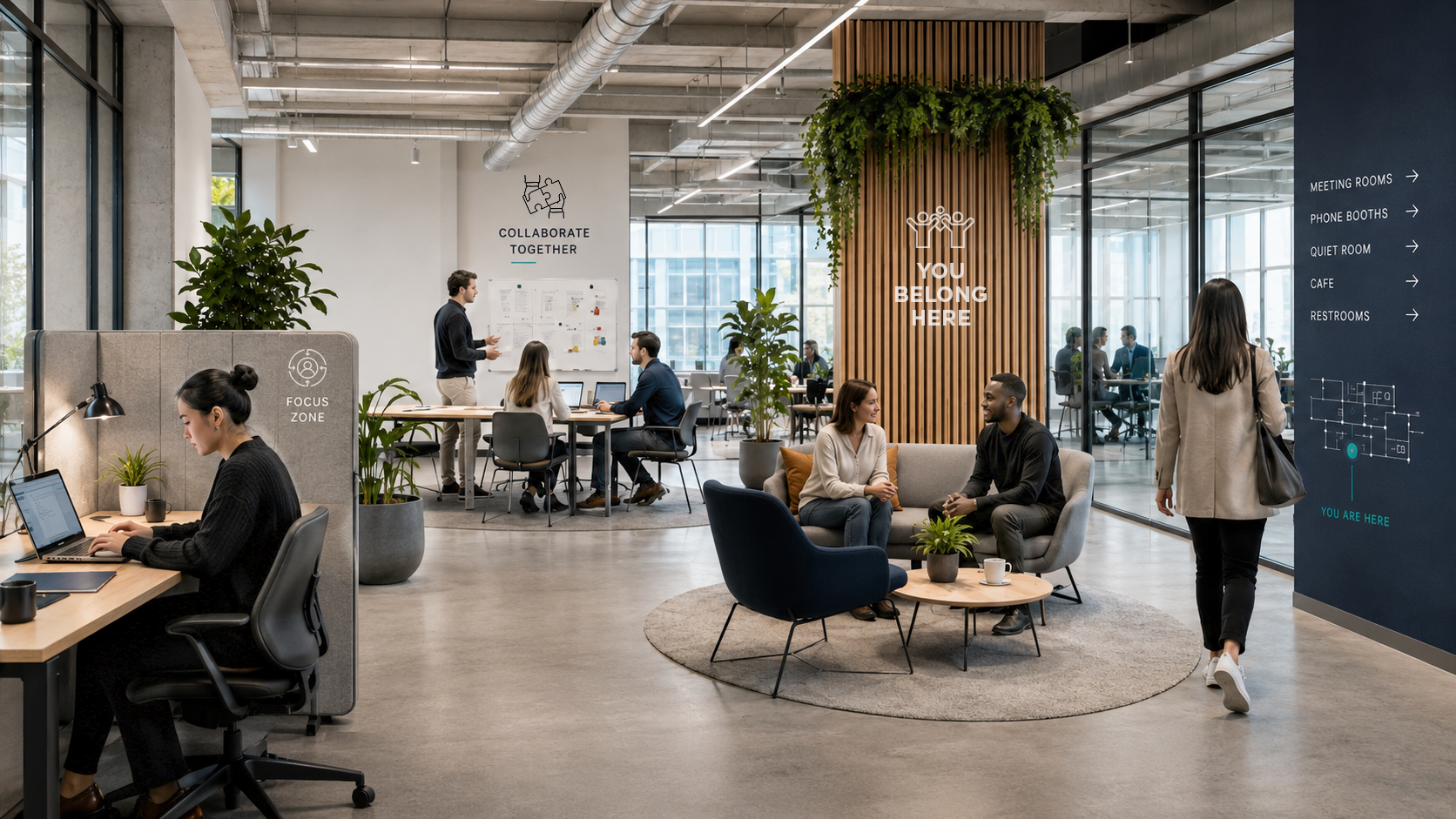
A visual research study on focus, collaboration, and belonging inside the future workplace.
The modern workplace is no longer only a place to complete tasks. It is a space for focus, collaboration, culture, and connection. Workplace by Design is a research-led design project that explores how visual communication can enhance clarity, movement, focus, and connection in modern office environments. The project studies how people interact with space and translates these insights into a workplace communication system that supports navigation, productivity, and a sense of belonging.
The goal was to create a visual communication system that helps employees understand where they are, where they need to go, and how each area of the workplace supports a different type of work experience.
Project Type: Visual Research / Environmental Graphic Design
Focus: Workplace Experience, Wayfinding, Data Visualization, Visual Systems
Role: Research, Strategy, Art Direction, Infographics, Environmental Graphics
Deliverables: Research visuals, signage system, workplace icons, zone map, digital screen, presentation graphics
Focus: Workplace Experience, Wayfinding, Data Visualization, Visual Systems
Role: Research, Strategy, Art Direction, Infographics, Environmental Graphics
Deliverables: Research visuals, signage system, workplace icons, zone map, digital screen, presentation graphics

Research Question
How can visual communication improve the way people feel, move, focus, and connect inside the workplace?
This question became the foundation for the project, shifting the focus from decoration to experience. Rather than treating signage, icons, and workplace graphics as decoration, the study positions them as tools that influence behaviour, confidence, and the overall employee experience. The goal was to understand how graphic design can support people as they navigate, use, and emotionally connect with the workplace.
____________________________________________________________________________________________________________________________________
Research Approach
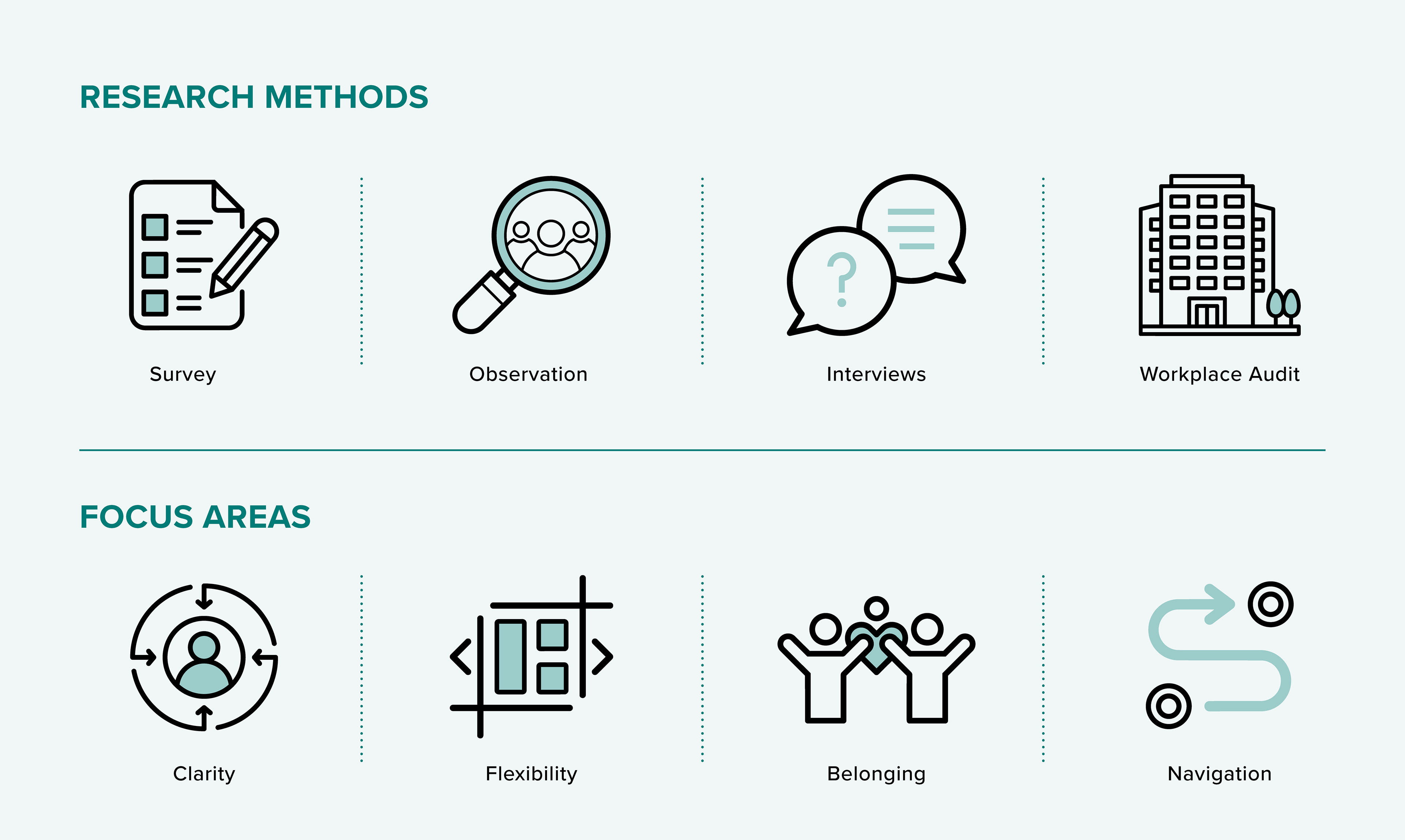
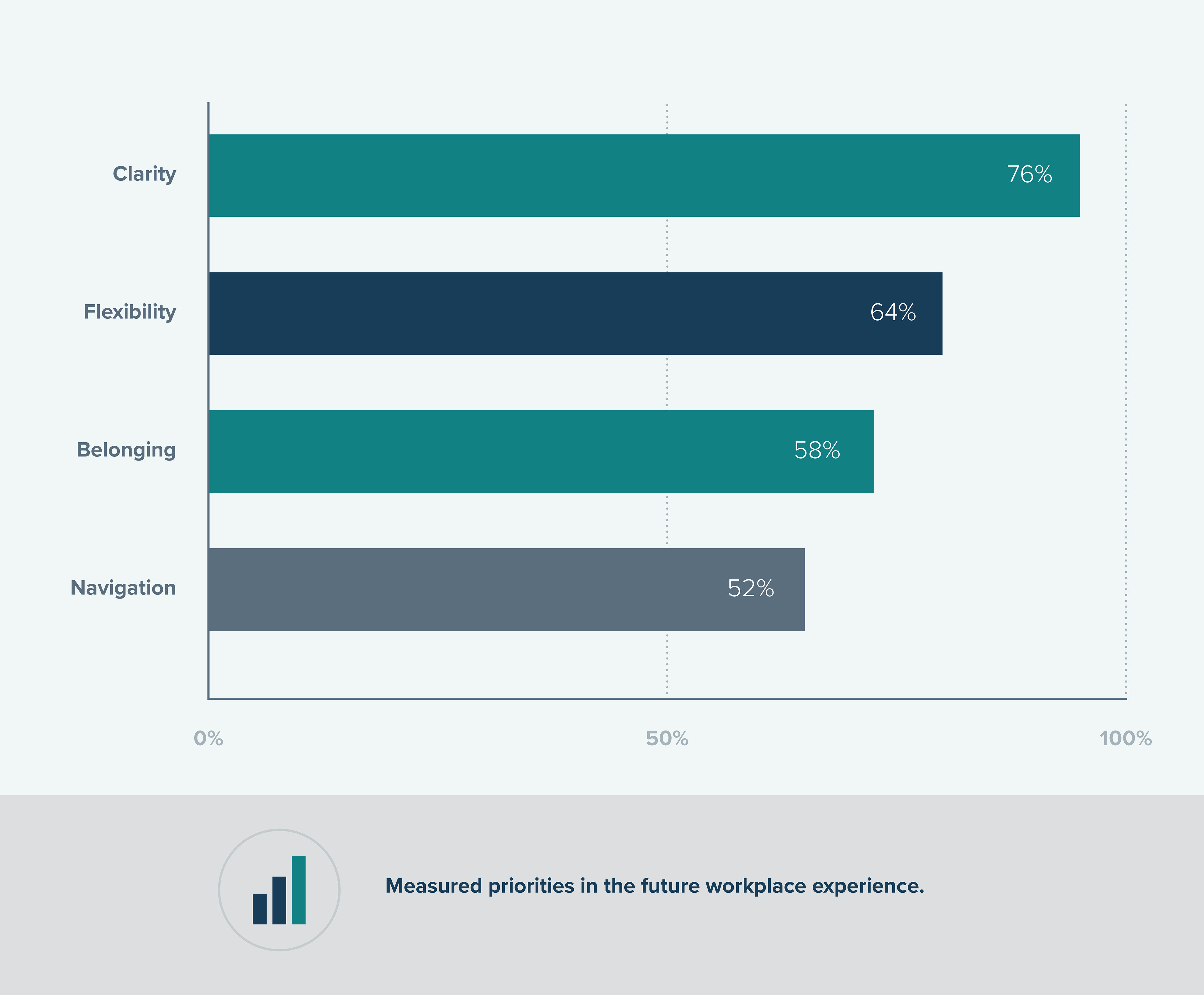
The project uses a research-oriented design process built around observation, behavioural thinking, and visual analysis. The goal was to understand how employees experience the workplace from four perspectives: clarity, flexibility, belonging, and navigation.
Methods
Survey: Used to identify what people value most in the workplace experience.
Observation: Used to study how people move, pause, gather, focus, and interact with shared spaces.
Interviews: Used to understand emotional needs such as comfort, confidence, inclusion, and connection.
Workplace Audit: Used to review how signage, zones, pathways, and communication touchpoints support the user journey.
Observation: Used to study how people move, pause, gather, focus, and interact with shared spaces.
Interviews: Used to understand emotional needs such as comfort, confidence, inclusion, and connection.
Workplace Audit: Used to review how signage, zones, pathways, and communication touchpoints support the user journey.
____________________________________________________________________________________________________________________________________
Focus Areas
Four focus areas guided the project: clarity, navigation, belonging, and flexibility. Each focus area connects a human need to a visual design opportunity.
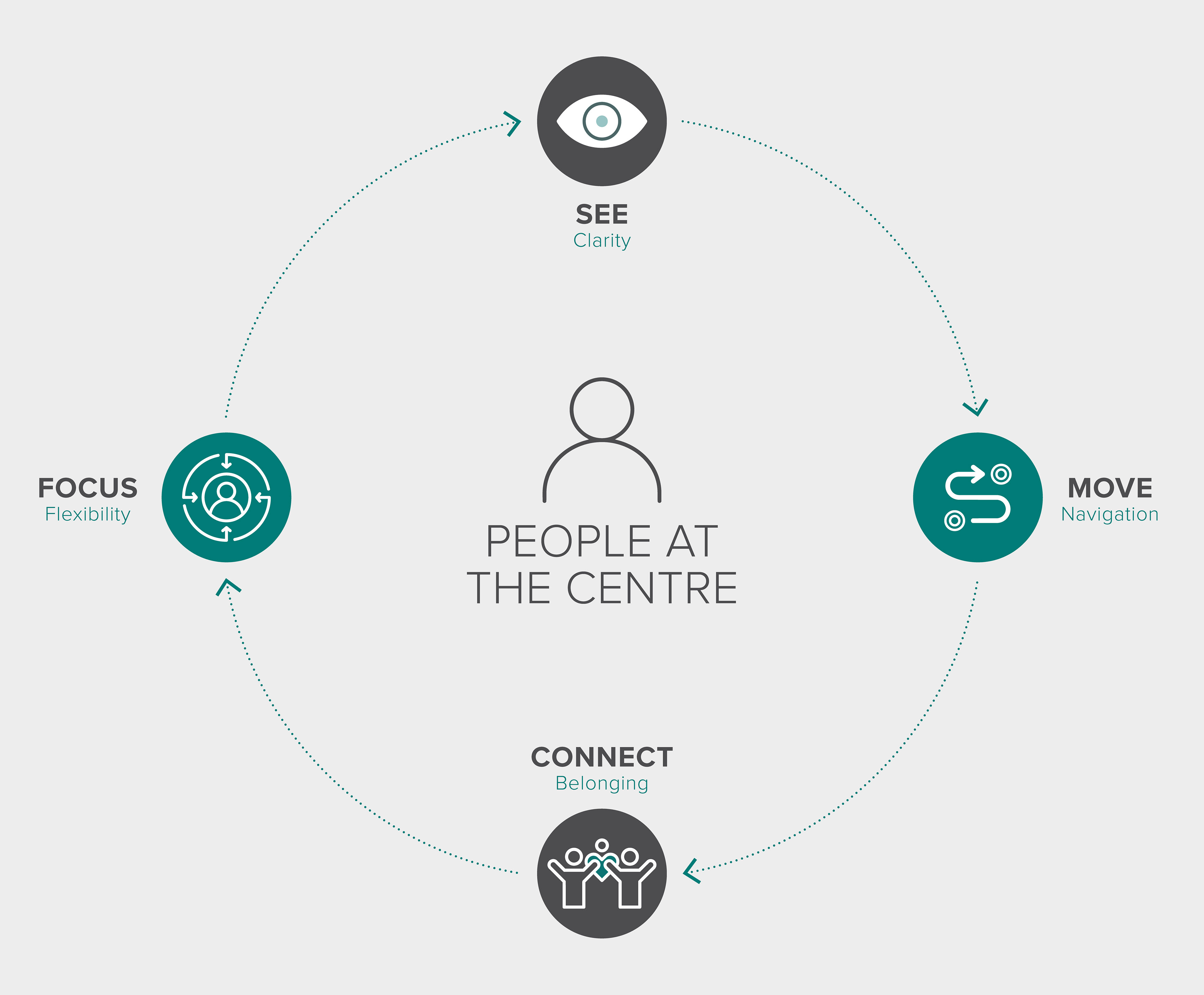
See/Clarity — clear visual cues help people understand information and space quickly.
Move/Navigation — wayfinding helps people move through the space with confidence
Connect/Belonging — creating a workplace that feels welcoming and supports human connection.
Focus/Flexibility — flexible zones allow people to choose the right setting for their task, and support different work modes and choices.
Move/Navigation — wayfinding helps people move through the space with confidence
Connect/Belonging — creating a workplace that feels welcoming and supports human connection.
Focus/Flexibility — flexible zones allow people to choose the right setting for their task, and support different work modes and choices.
Workplace Experience Model
The experience model places people at the centre of the workplace. Around them are four key behaviours: seeing, moving, connecting, and focusing. Each behaviour is supported by a design principle that helps the space become easier to understand and more comfortable to use.
____________________________________________________________________________________________________________________________________
Key Findings
The research was translated into four key findings that shaped the design system. These findings show how visual communication can influence confidence, performance, engagement, and focus inside the workplace.
____________________________________________________________________________________________________________________________________
Finding 1
Clarity Supports Confidence
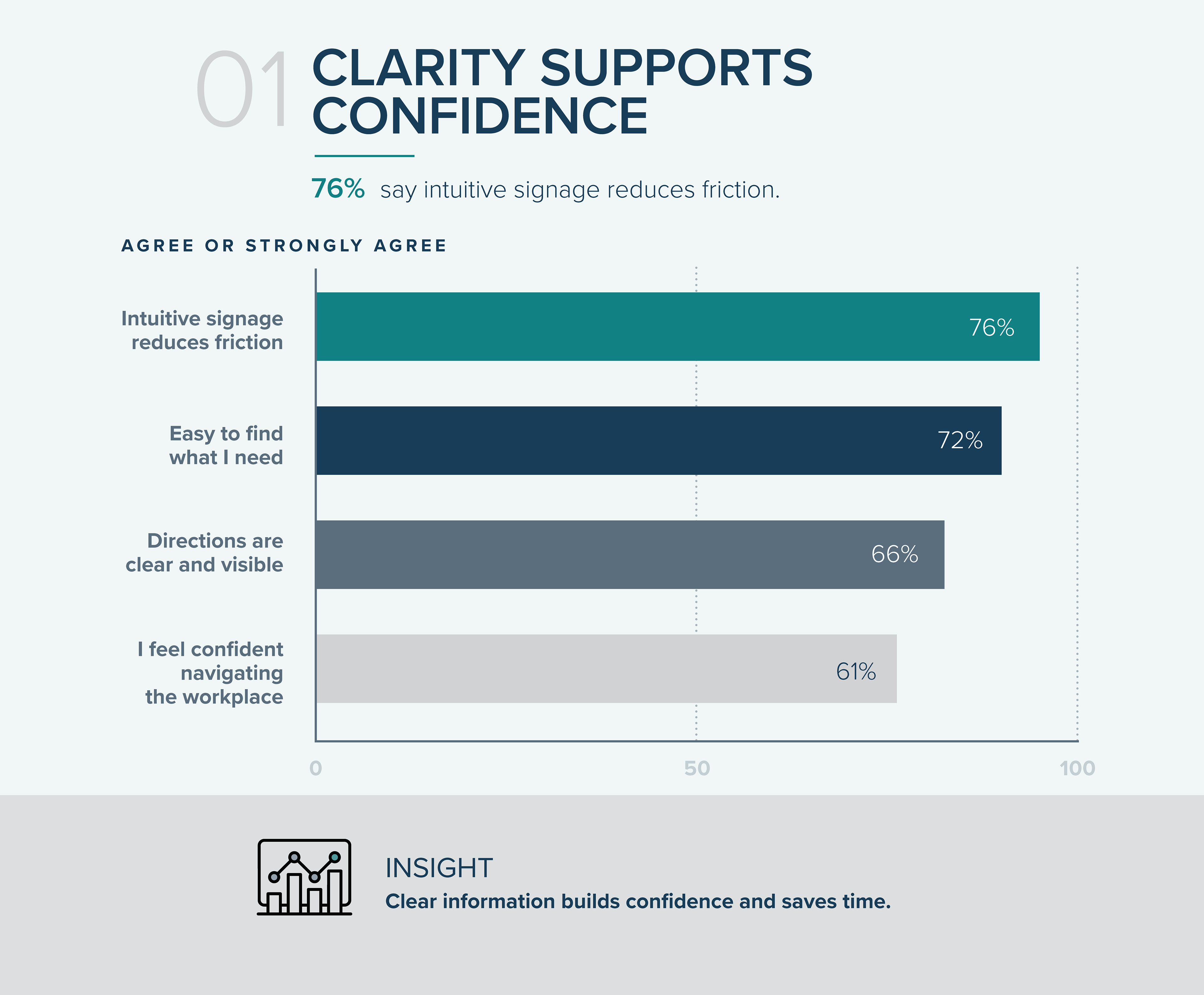
Clear signage and intuitive information help people understand the workplace faster, move through it with confidence, and use each space without confusion. When people can quickly find what they need, they feel more confident navigating the environment.
Design opportunity:
Create a consistent wayfinding system with clear hierarchy, simple icons, and visible directional cues.
____________________________________________________________________________________________________________________________________
Finding 2
Variety Supports Performance
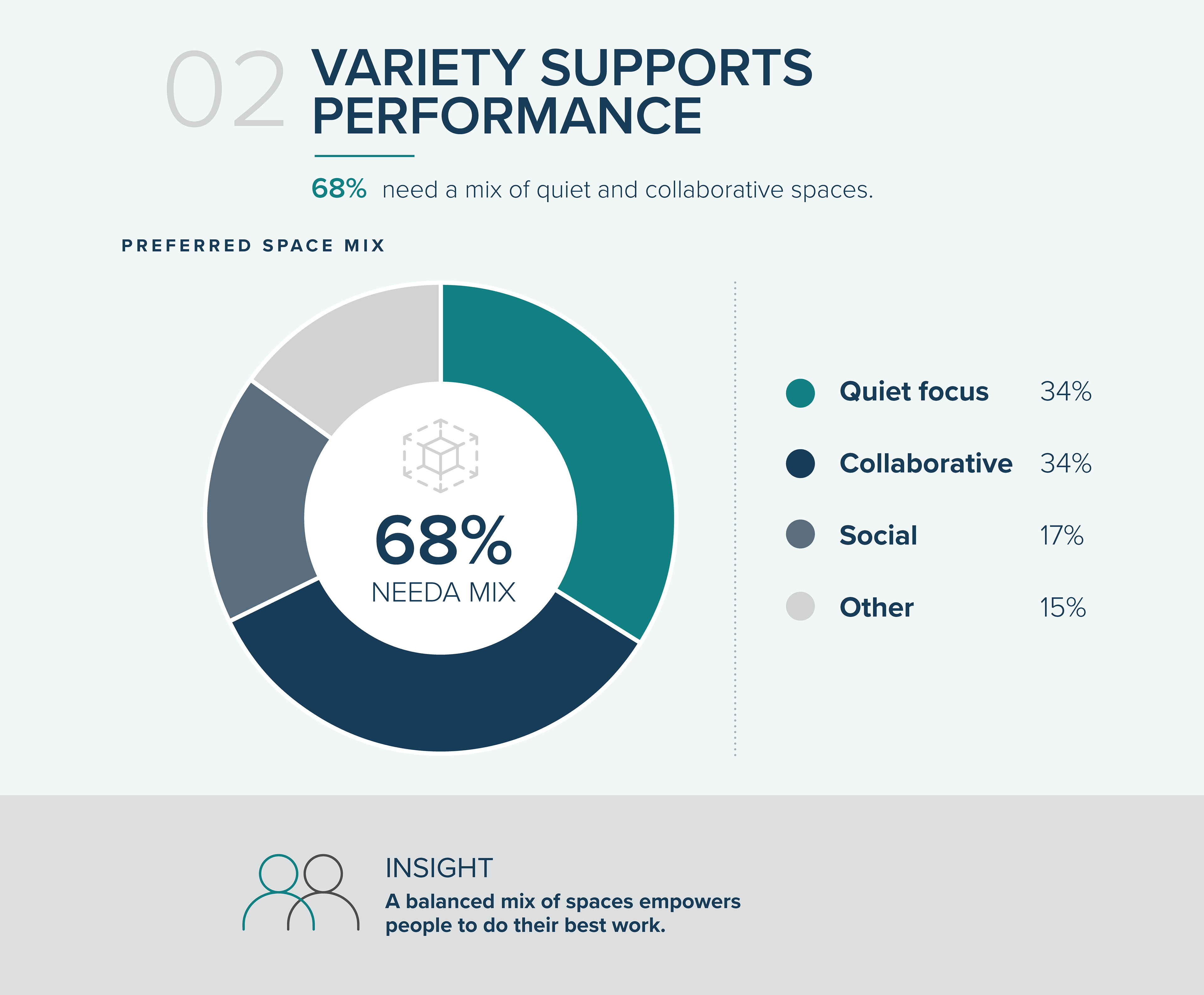
Employees need a balanced mix of spaces that support quiet focus, collaboration, social interaction, and support functions. A strong workplace system should make these zones easy to identify and understand.
Design opportunity:
Use colour, icons, signage, and zone mapping to help people choose the right space for the right task.
____________________________________________________________________________________________________________________________________
Finding 3
Belonging Drives Engagement
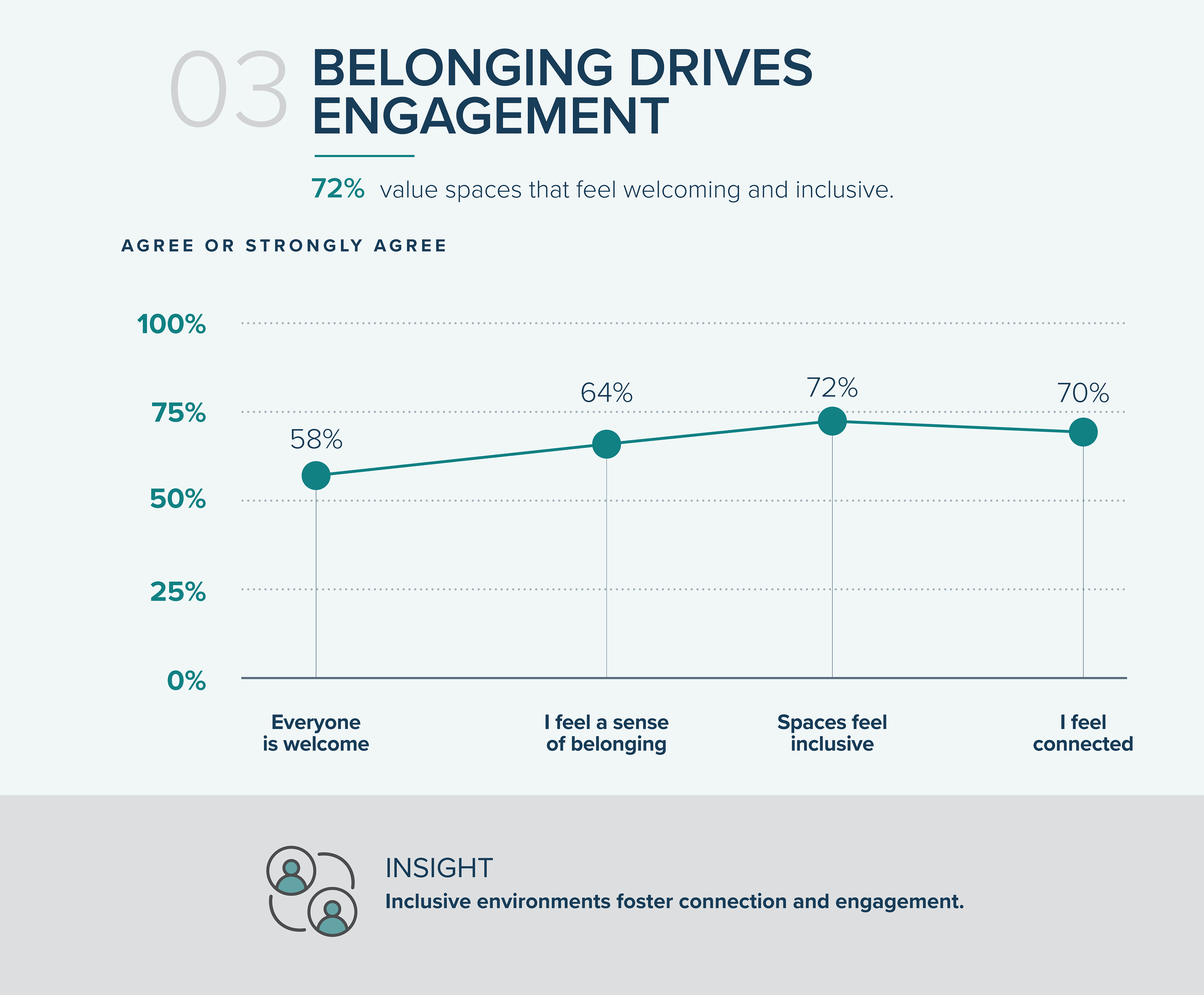
People respond positively to environments that feel welcoming, inclusive, and connected. Visual communication can help reinforce a sense of culture and
shared purpose.
shared purpose.
Design opportunity:
Develop wall graphics, messaging, and digital touchpoints that make the workplace feel human, supportive, and connected.
____________________________________________________________________________________________________________________________________
Finding 4
Flexibility Improves Focus
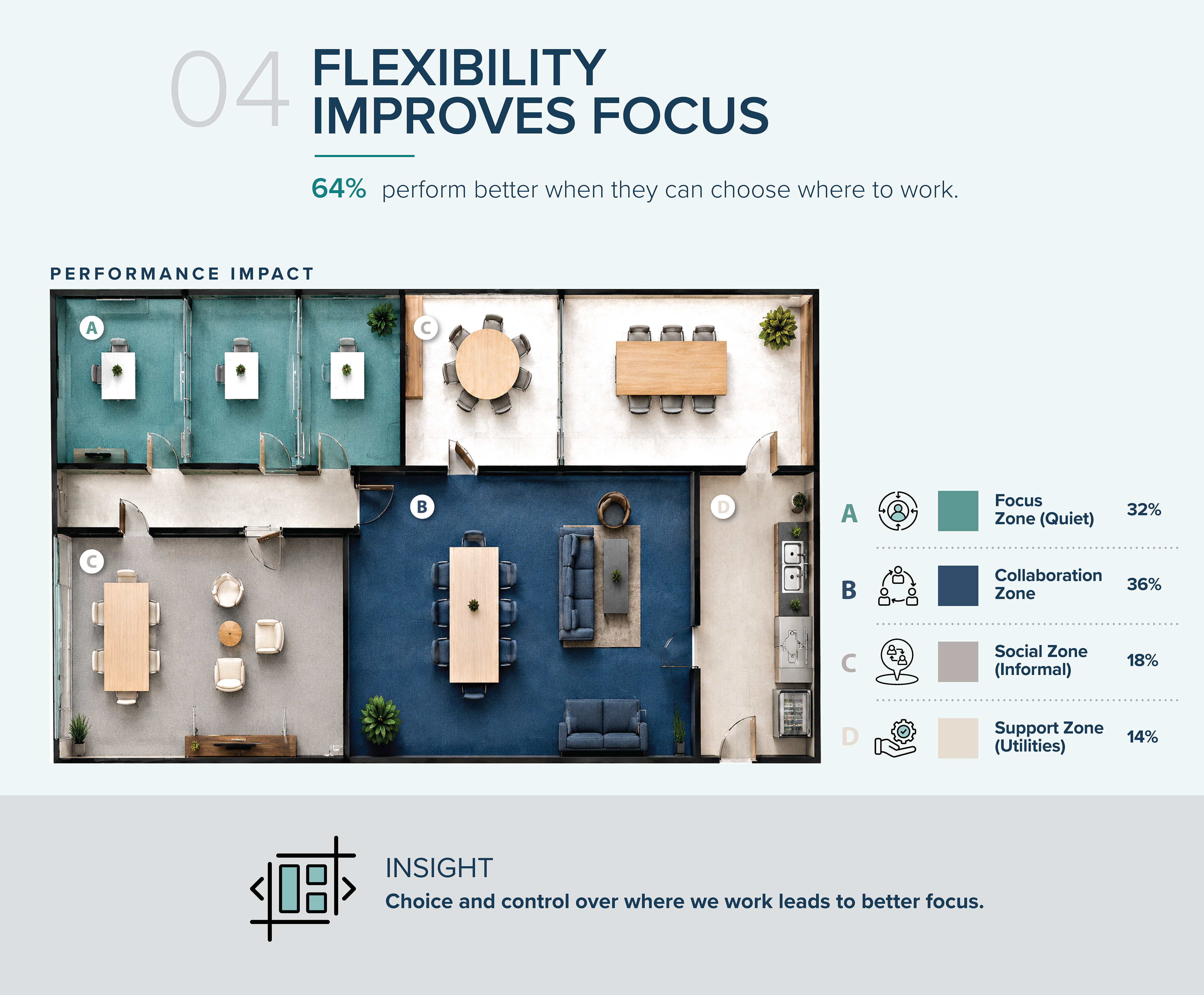
Choice and control over where people work can improve focus and comfort. Visual design can help employees understand the purpose of each zone and select the environment that best supports their work.
Design opportunity:
Design a workplace zone map and visual system that clearly identifies focus zones, collaboration zones, social zones, and support areas.
____________________________________________________________________________________________________________________________________
Visual System
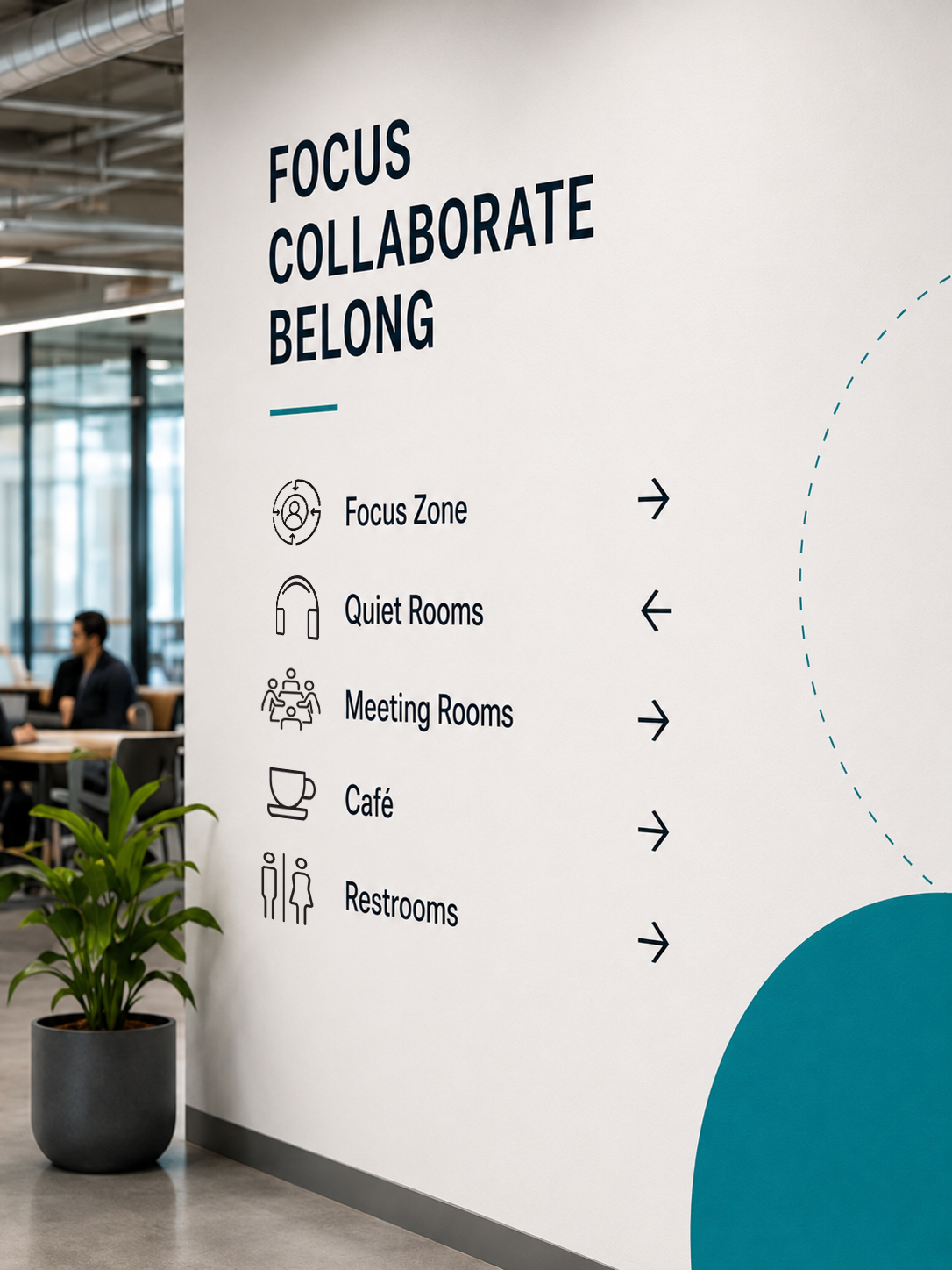
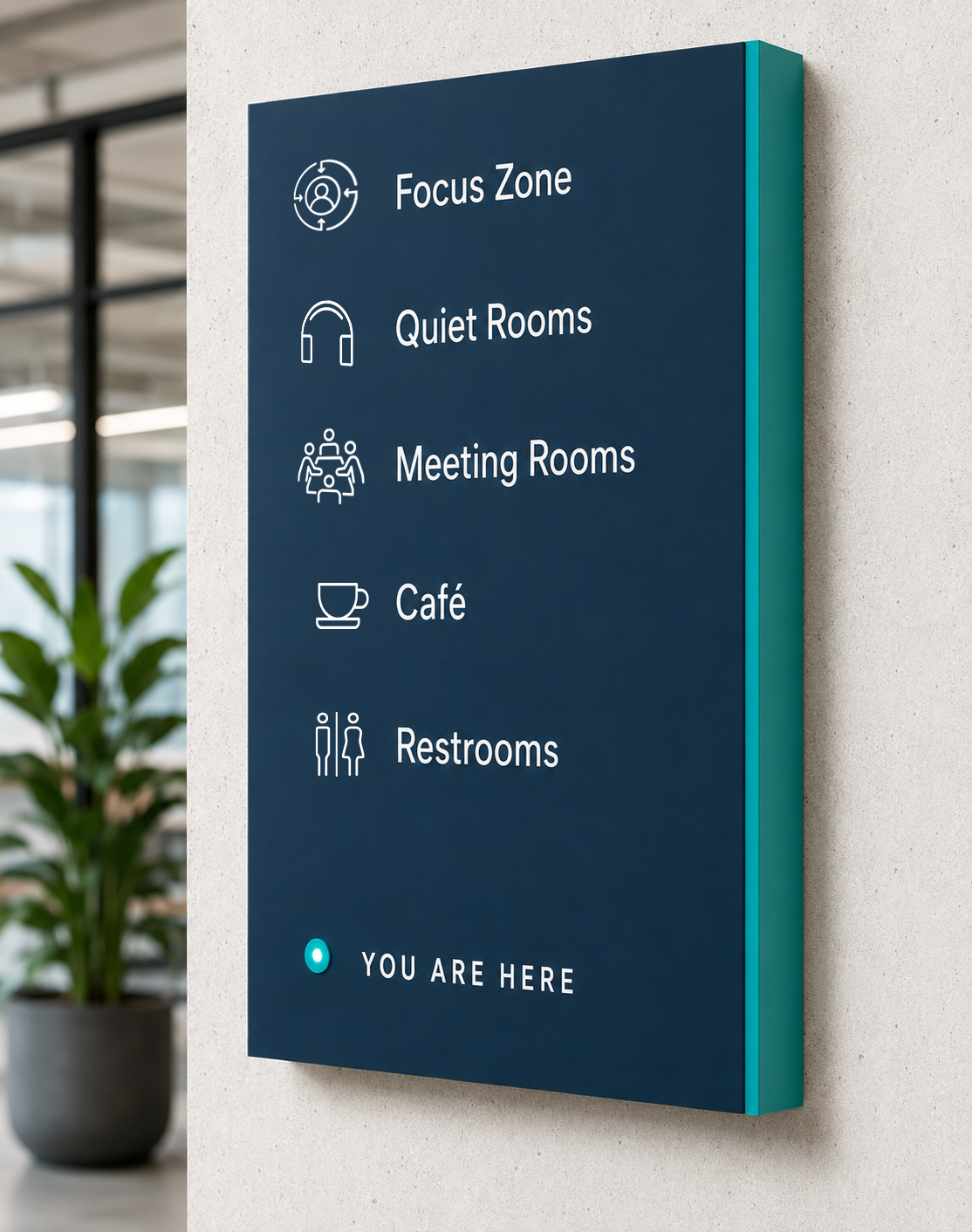
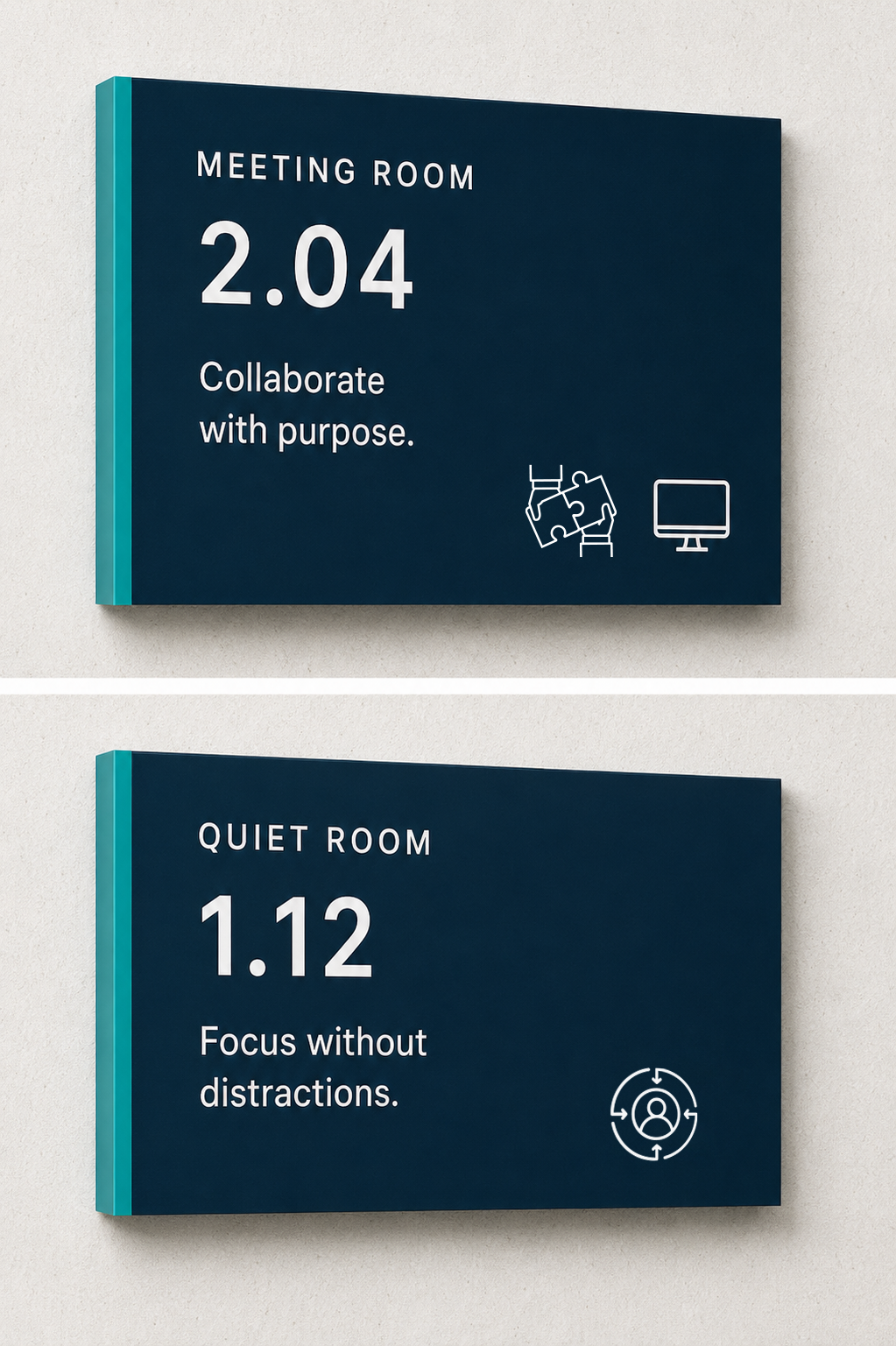
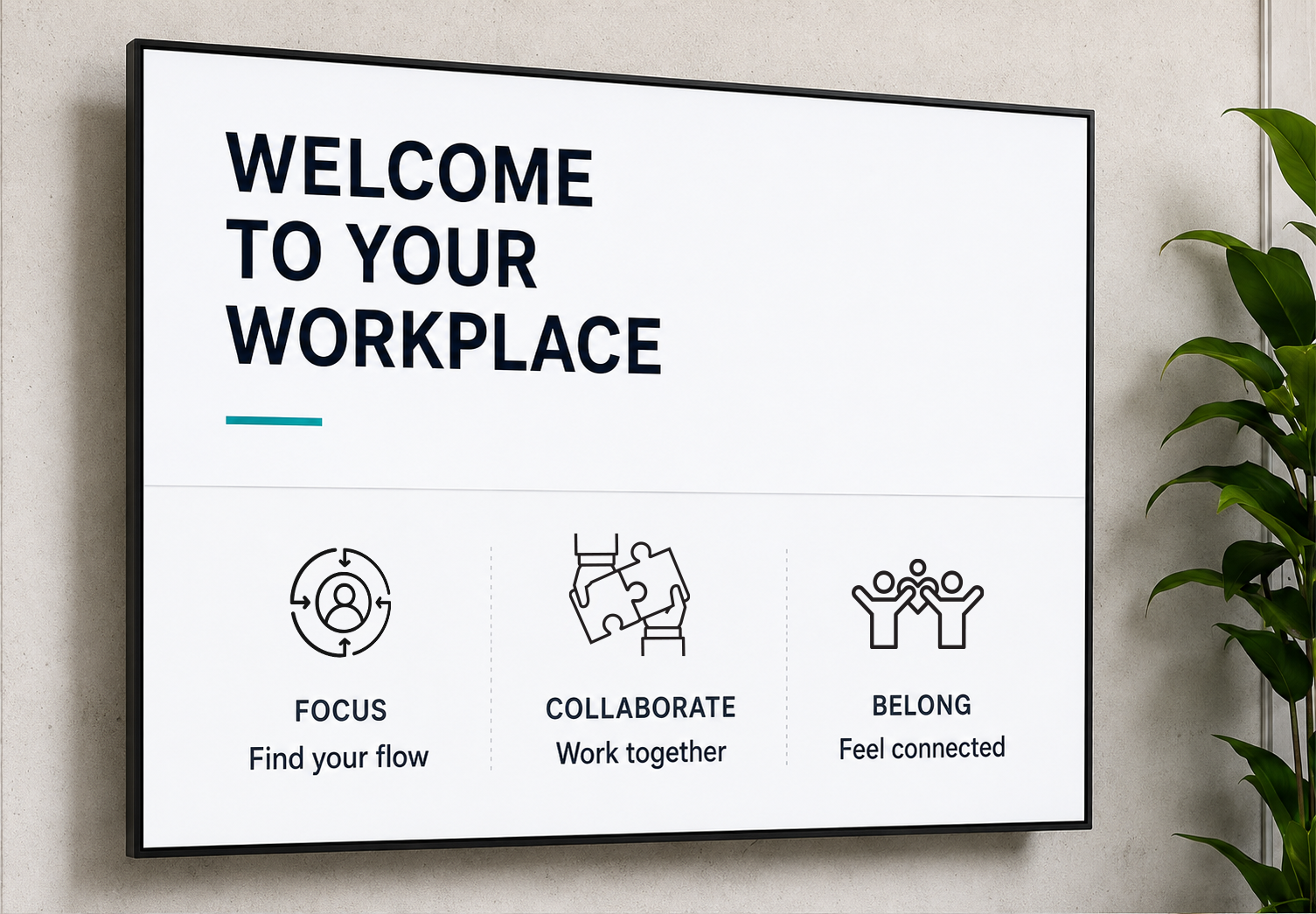
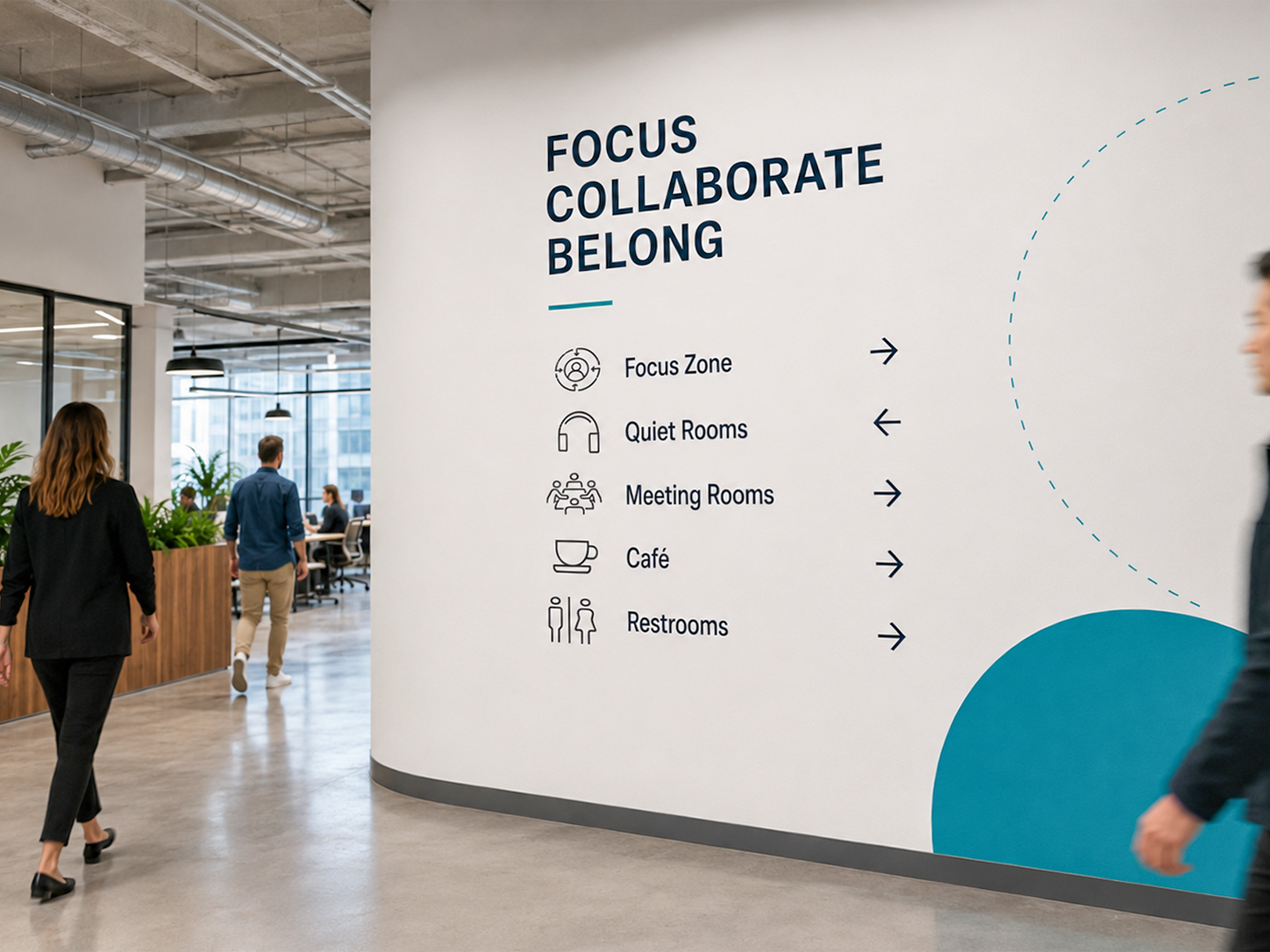
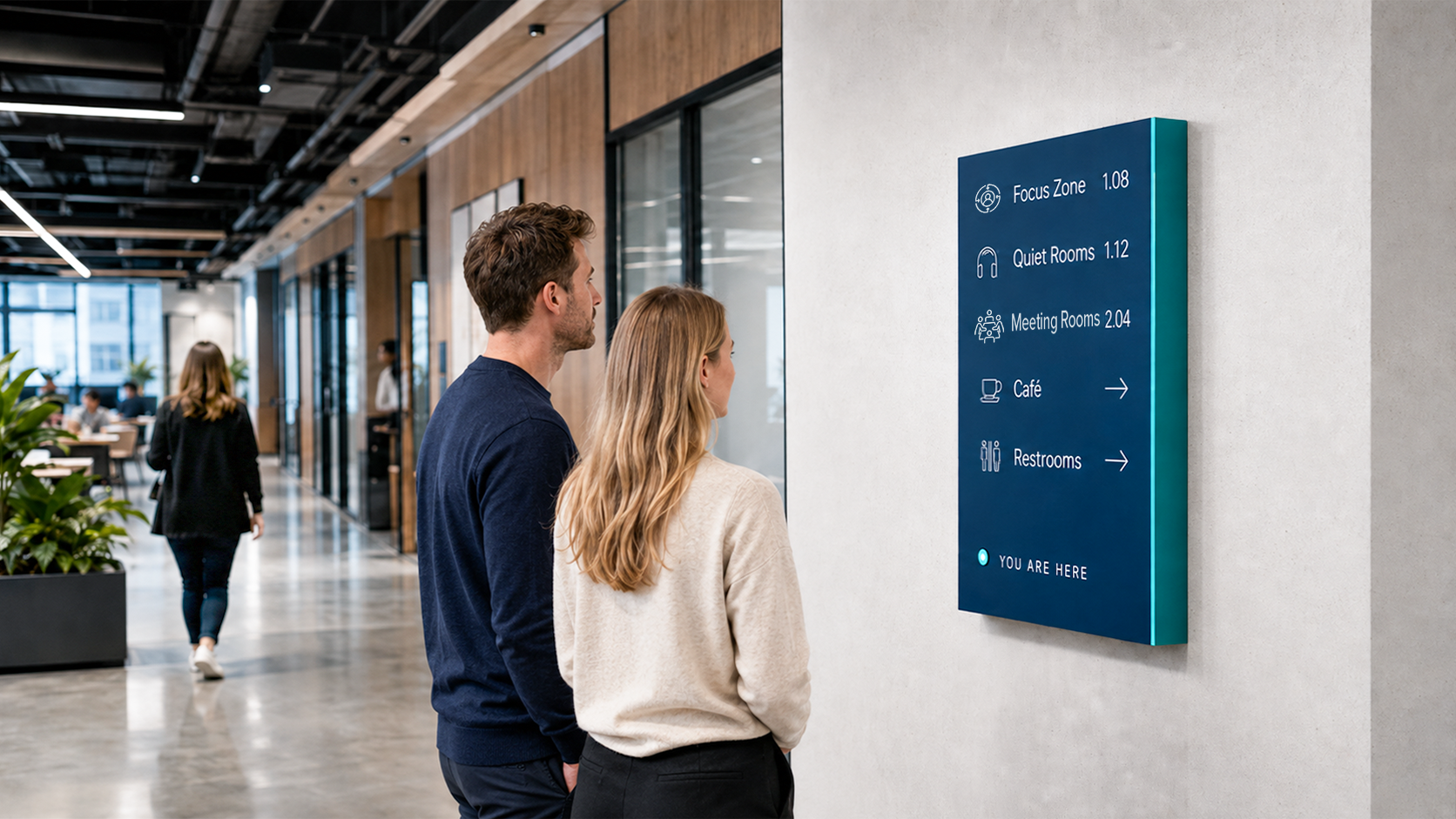
The final design response turns research insights into a cohesive workplace communication system. The system includes wayfinding signage, meeting room graphics, wall messaging, digital welcome screens, icons, colour coding, and a workplace zone map.
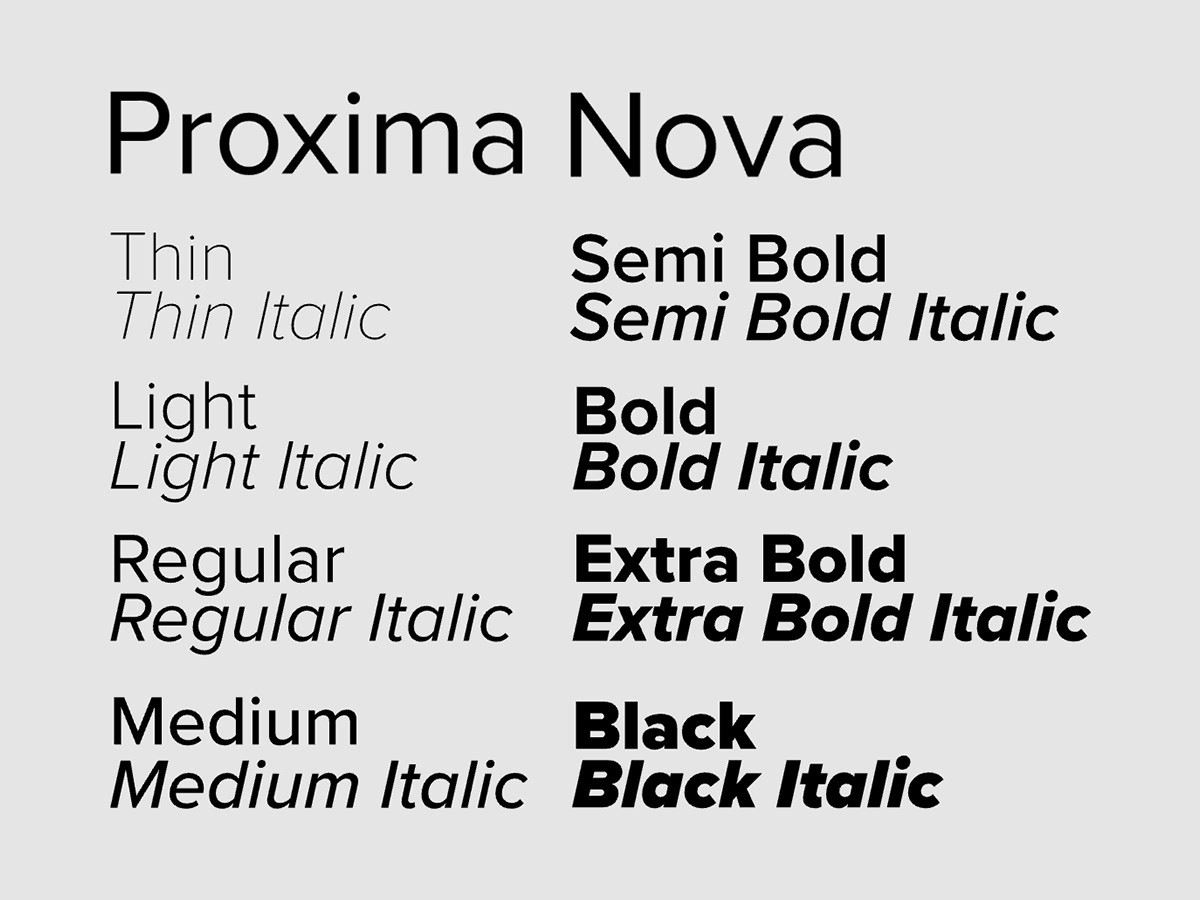
The system uses clear typography, simple iconography, consistent hierarchy, and a calm colour palette to make workplace information easier to understand. The design language was created to feel modern, professional, accessible, and human-centred.
Each touchpoint was designed to reduce confusion, support movement, and create a stronger connection between people and space.
The system was applied across multiple workplace touchpoints to create a consistent experience from entry to destination. Each application helps people understand where they are, where to go, and how each space supports a different type of work.



____________________________________________________________________________________________________________________________________
Process
The project followed a four-step process: research, synthesis, design, and prototype. Each stage helped translate workplace observations and behavioural insights into a practical visual communication system.

Final Outcome
Workplace by Design demonstrates how graphic design can become a strategic tool for improving workplace experience. By combining research, information design, environmental graphics, and visual systems, the project shows how design can help people navigate with confidence, focus with intention, and feel more connected to the spaces they use every day. The future workplace performs best when communication, space, and experience
work together.
work together.